 Pinehurst Golf Cart Repair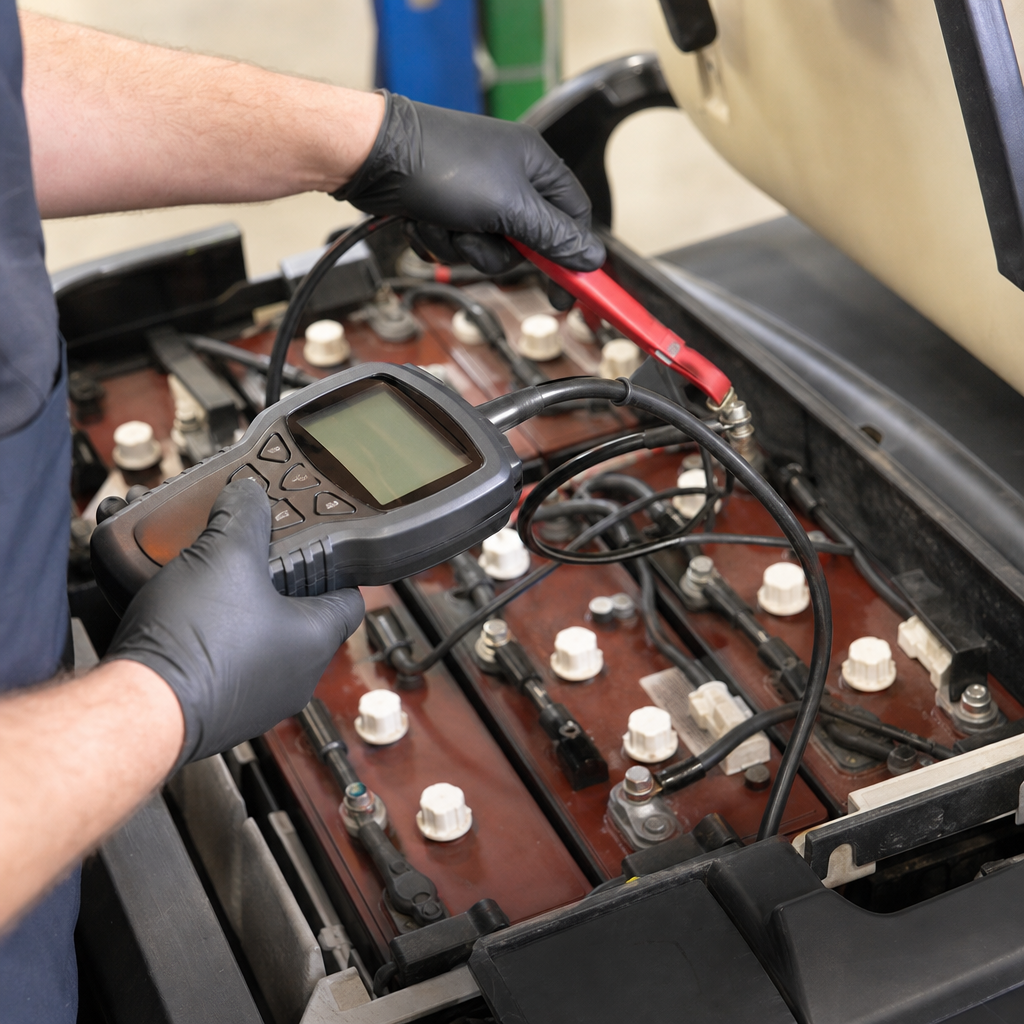
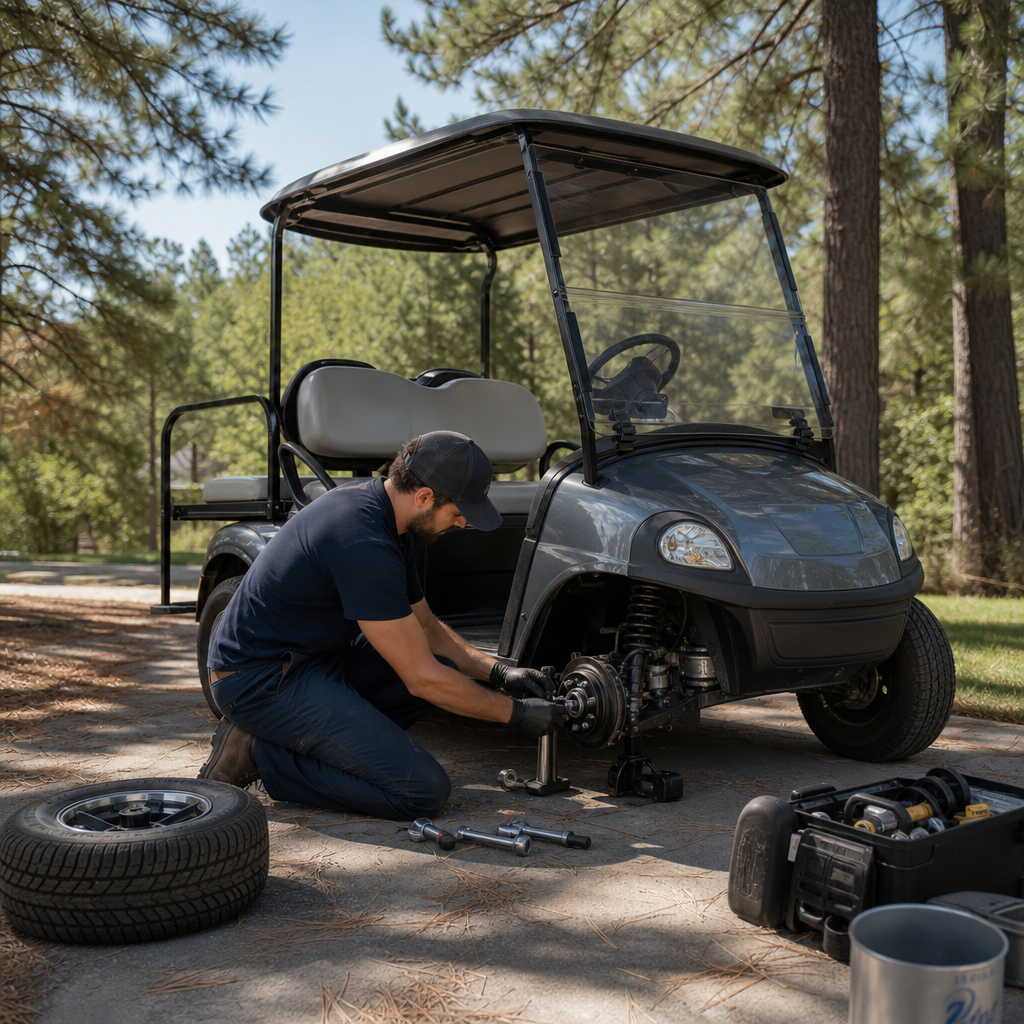
Pinehurst Golf Cart Repair sends a technician to your driveway, garage, or cart barn anywhere in Pinehurst and the Sandhills and fixes your cart on-site: batteries, brakes, tires, chargers, solenoids, motors, and controllers. A full lead-acid battery pack runs $1,200 to $1,800 installed, brake work $75 to $400, tires $75 to $150 each, and the $50 to $100 service call is usually applied toward your repair. Describe the symptom by form so the technician can bring the likely parts; if one must be ordered, expect a second visit.
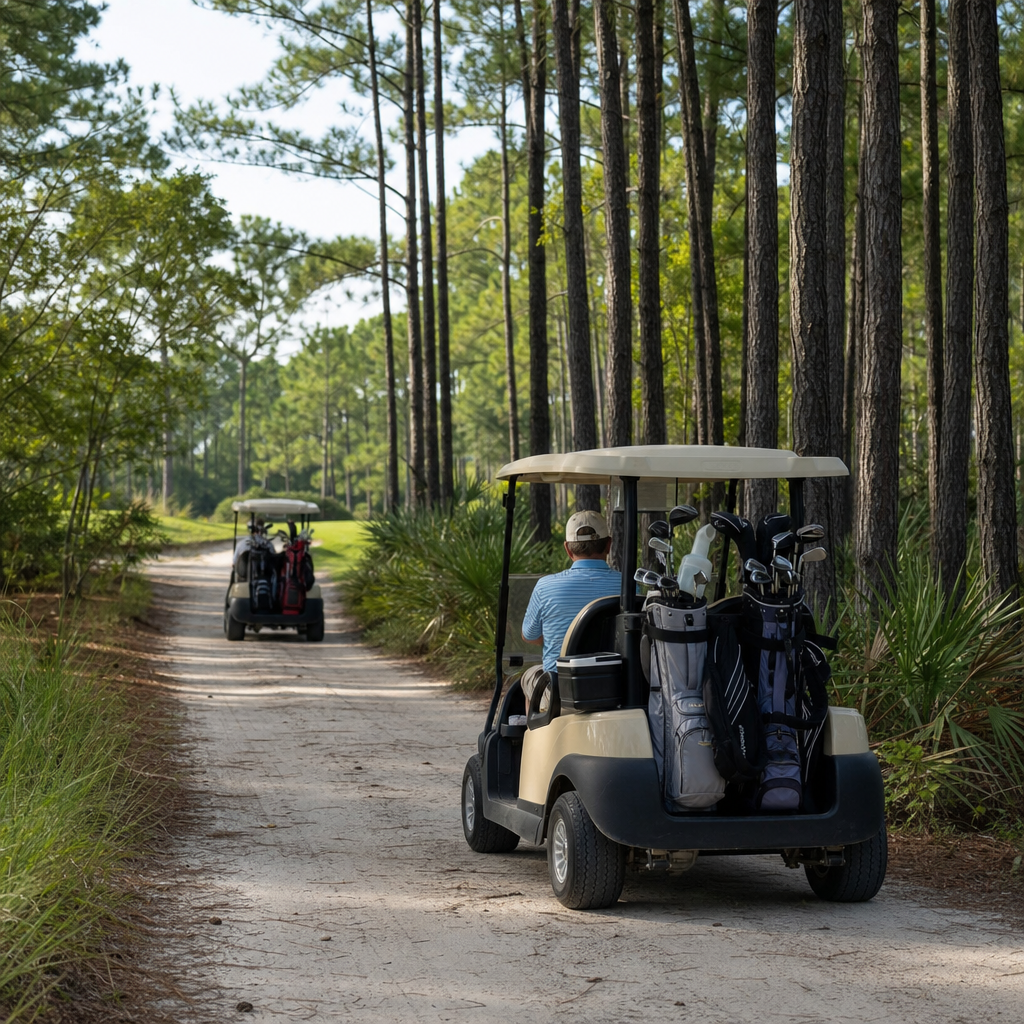
Pinehurst is a golf cart town in a way that is easy to underestimate until your own cart quits. The Village allows registered carts on most of its streets, and a lot of residents use them the way other towns use a second car: to the course, to the Village Green, to a neighbor’s house in No. 6, down to the clubhouse at Forest Creek or Pinewild. When the cart dies here you do not just miss a tee time. You lose the vehicle that does the short trips. That is why mobile repair matters here, and why a prompt visit matters.
What gets fixed, at your home
- Mobile golf cart repair: the core service. On-site diagnosis and repair of whatever is wrong: will not move, will not charge, weak on hills, strange noises. All major brands, electric and gas.
- Battery replacement: new lead-acid packs installed with haul-away of the old cores, plus honest lead-acid versus lithium math for carts that log real daily miles.
- Brakes and tires: adjustments, shoes, drums, and new tires installed in your driveway. Sand and pine straw wear both faster than owners expect.
- Motor and controller repair: solenoids, speed controllers, and drive motors diagnosed properly before anything gets replaced.
- Charger repair: carts that “will not take a charge” are often a charger, charge port, or corroded connection, not a battery problem. Test before you buy anything.
- Tune-up service: the Sandhills annual: battery water and load test, terminal cleaning, brakes, tires, lights, and a pollen-and-sand cleanout that matters more here than most places.
Full ranges for everything are published on the pricing page. Most shops make you call for a number. Here you see it first.
Why Sandhills carts break the way they do
The ground is sand, and sand gets into everything. The USDA Natural Resources Conservation Service soil survey for Moore County maps the Candor-Ailey-Vaucluse association across roughly 50 percent of the county, all of it in the southern, Sandhills end where Pinehurst, Southern Pines, and Aberdeen sit. The dominant Candor series is described in NRCS’s official series description as somewhat excessively drained sand with rapid permeability in the upper profile, formed under longleaf pine, turkey oak, and blackjack oak. In plain terms: the soil under your cart path is loose, dry, and abrasive. Fine sand rides in on tires, packs into brake drums, works into wheel bearings, and grinds tread. A cart that lives on a sandy community trail needs brakes and tires looked at every year, not every three.
Pine pollen is a spring maintenance event. Longleaf pine pollinates in early spring, and the Sandhills are longleaf country. The yellow film that coats every cart seat in the county from March into April is not just cosmetic. Pollen settles onto battery tops and terminals, absorbs humidity, and creates a conductive paste that slowly self-discharges a flooded pack and accelerates terminal corrosion. It also packs into charger vents and controller heat sinks. A spring tune-up should include a battery-top wash and vent cleanout for exactly this reason. The full seasonal schedule is in the Sandhills golf cart maintenance calendar.
Summer heat shortens battery life. NOAA’s 1991 to 2020 climate normals for the Carthage station put the July average high at 90.3°F and count about 55 days a year at 90°F or above; at Fayetteville Regional Airport, about 35 miles southeast on the coastal plain, it is 70 such days. Heat speeds up the chemistry inside a flooded lead-acid battery: water evaporates faster, and once the electrolyte level drops below the plates, the exposed lead sulfates and permanently loses capacity. Heat also raises the self-discharge rate, so a cart that sits for two weeks in a hot garage in August comes back lower than it left. Watering on a schedule from May through September is the cheapest thing you can do for a $1,200 pack.
Winter is the cold-cranking season. The same Carthage normals record a January average low of 30.6°F and about 62 nights a year at or below freezing. Cold does not damage a healthy lead-acid battery, but it does cut the current it can deliver, which is why a pack that felt fine in October strands someone on a frosty February morning on the way to the course. A weak battery in a six-battery string reveals itself first in the cold. If your cart hesitates on the first press of the pedal on a cold morning, that is a load test waiting to happen.
Humidity never fully lets up. Carthage normals put annual precipitation at 47.81 inches, with more than 15 inches of it falling in July through September. Humid garages keep terminals, cable lugs, and charge-port contacts oxidizing year-round. Corroded connections add resistance, resistance mimics a dying battery pack, and owners end up shopping for $1,200 in batteries when the real fix is a $100 cable-and-terminal service.
Pinehurst’s golf cart rules, and what they mean for repair
Under North Carolina law, a “golf cart” is a vehicle designed for a golf course that is not capable of exceeding 20 mph (G.S. 20-4.01(12b)). The state does not let you drive one on public roads by default. It lets towns opt in: G.S. 160A-300.6 authorizes a city to regulate golf carts on streets posted 35 mph or less, require registration and a fee, set equipment rules, and specify hours. Nobody under 16 may drive one on a public street anywhere in the state.
The Village of Pinehurst opted in. Section 71.17 of the village code lays out the rules, and they touch a surprising amount of repair work:
- Stickers. Carts may cross village streets without one, but may not operate on or alongside village streets unless they display current village-issued stickers on the front and rear. Registration is a one-time $20 fee at Village Hall on Magnolia Road, and you get a map of restricted roads and crossings with it.
- Where you cannot go. No cart on any street posted over 35 mph. No operating on or alongside NC 211 or US 15-501 inside the corporate limits, and those two may only be crossed at signalized intersections. NC 5, NC 2, Morganton Road, Page Road, and Linden Road may be crossed directly but not driven along. The hospital zoning district and Page Drive, Aviemore Drive, Memorial Drive, and Regional Drive are off-limits entirely.
- Equipment. Rear-view or side-view mirrors are required. Daylight operation only, unless the cart carries two front lamps (or a cart-specific halogen light bar) visible from 300 feet and two red rear lamps visible from 200 feet. Then it may run after sunset.
- Driver and speed. A valid North Carolina driver’s license, carried on your person, and never more than 20 mph.
That last point matters for owners thinking about speed upgrades. A cart with a top speed above 20 mph is no longer a golf cart under state law. Between 20 and 25 mph it becomes a low-speed vehicle under G.S. 20-4.01(27)g, and G.S. 20-121.1 then requires headlamps, stop lamps, turn signals, tail lamps, reflectors, parking brake, mirrors, windshield and wipers, speedometer, seat belts, a VIN, plus DMV registration and insurance. The whole map, village and state, is in the guide to driving a golf cart on Pinehurst streets.
For repair, the practical version is: lights, mirrors, and brakes on a Pinehurst street cart are not accessories. Lighting circuits can be repaired, light kits that meet the ordinance’s visibility distances installed, and carts made sticker-ready, all as ordinary repair work.
Who drives carts here
Pinehurst’s 2020 Census count was 17,581 residents with a median age of 57.2, and 39.2 percent of the village is 65 or older. Moore County as a whole runs 24.7 percent over 65 against a state that is much younger. That is not a retirement-community statistic in the Villages sense; it is a village of golf communities where the cart is a daily convenience for a lot of people who would rather not lift a 60-pound battery themselves. It is also a village with a lot of golf: Pinehurst Resort’s ten courses, including No. 2, which hosted its fourth U.S. Open in 2024 and is the USGA’s first anchor site with Opens booked for 2029, 2035, 2041, and 2047. The Country Club of North Carolina, Pinewild, and Forest Creek are gated golf communities on the village’s edges, and the neighborhoods around Pinehurst No. 6 and No. 7 put private carts on cart paths and quiet streets every day.
Southern Pines, Aberdeen, and Whispering Pines each have their own cart patterns, which is why each has its own page. Seven Lakes, out NC 211 to the northwest, runs three distinct communities with their own roads. Carthage, the county seat, is horse and farm country where carts do property work.
How a mobile visit works
- Tell us the symptom. Will not move, clicks but no go, will not charge, dies on hills, squeals when braking. Most problems narrow down fast from a good description, so the tech arrives with the likely parts.
- A mobile tech comes to you. Driveway, garage, or cart barn, at a scheduled window: anywhere in Pinehurst, Southern Pines, Aberdeen, Seven Lakes, Whispering Pines, or Carthage. The $50 to $100 trip fee typically covers the diagnostic and is usually applied to the repair; check when booking.
- Diagnosis before recommendation. Load test on each battery, voltage checks across the pack, charger output test, solenoid and controller checks. The point is to isolate the actual fault instead of selling the most expensive maybe.
- Flat quote on the spot, fix on the spot. Mobile techs commonly carry battery sets, solenoids, brake shoes, and tires. Approve the number and most jobs are done in that same visit.
- Finish clean. Lead-acid packs get watered and terminals cleaned and coated, everything gets a torque check and a test drive, and old batteries should leave with the tech for recycling.
Straight answers, published prices
Two things we will not do. We will not pretend to be something we are not: we are an independent mobile service, not an authorized dealer or warranty center for Club Car, E-Z-GO, Yamaha, ICON, or Evolution. If your cart is under factory warranty, your selling dealer should handle warranty work. And we will not steer you toward parts you do not need. A cart that will not charge should get a charger and charge-port test before anyone talks about a battery pack, and a weak cart should get a per-battery load test (on a flooded pack, a hydrometer check of specific gravity cell by cell) before anyone condemns six batteries when one is the problem. Voltage sag under load, a chattering solenoid, or a corroded main positive cable each masquerade as “dead batteries,” and telling them apart is the actual skill you are paying for. If a repair does not make sense against the value of an old cart, we will say that too.
More on who we are and how a visit works is on the about page, and the FAQ answers the most common questions.
Get a fast quote
Most of our Moore County calls start with a cart that will not leave the garage. Tell us the brand, model year if you know it, whether it is a 36V or 48V electric or a gas cart, and what it is doing. A photo of the battery compartment or dash helps. We come back with a flat number and a scheduling window, and nothing is scheduled until you’ve seen both, anywhere from Old Town Pinehurst to Seven Lakes West to downtown Southern Pines.